EtrueSports Tech
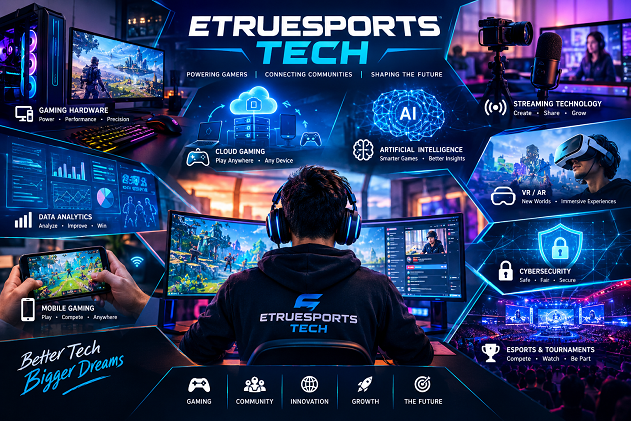
The gaming industry is changing faster than ever, and technology is at the centre of this transformation. From powerful gaming computers and high-refresh-rate monitors to artificial intelligence, cloud gaming, virtual reality, and advanced esports platforms, modern gaming has become much more than entertainment. The phrase etruesports tech represents an interest in the technology, tools, innovations, and digital trends shaping today’s gaming and esports experience.
Technology has transformed how players compete, communicate, stream, and follow their favourite games. Professional esports players now depend on highly optimised hardware, fast internet connections, sophisticated software, analytics, and carefully designed gaming environments. At the same time, casual players are gaining access to technologies that were once available only to professional competitors.
Understanding etruesports tech means looking beyond individual devices. It means exploring the complete ecosystem surrounding modern gaming, including hardware, software, connectivity, artificial intelligence, game development, streaming, cybersecurity, and esports competition.
Also Read: Gaming Updates from EtrueSports EtrueGames
What Is EtrueSports Tech?
EtrueSports tech can be understood as a broad concept covering technology related to modern esports and gaming. It includes the devices, platforms, software, systems, and innovations that help players enjoy better gaming experiences and compete more effectively.
Gaming technology includes familiar products such as gaming keyboards, mice, headsets, graphics cards, processors, monitors, and controllers. However, the technology ecosystem goes much further. Cloud infrastructure, game engines, artificial intelligence, online matchmaking, anti-cheat systems, broadcasting technology, and performance analytics are also important parts of the modern gaming environment.
For esports in particular, technology plays a critical role. Competitive games require stable connections, responsive controls, accurate displays, and reliable systems. Even a small delay can affect a player’s performance in a highly competitive match.
As technology continues to develop, the relationship between gaming and innovation will become even stronger.
Why EtrueSports Tech Matters
Technology is important because modern gaming depends on performance, connectivity, and accessibility. A powerful computer can improve graphics and frame rates, while a responsive monitor can make fast-moving gameplay easier to follow. Similarly, a reliable network connection can reduce interruptions during online matches.
For professional esports players, these factors can directly influence competitive performance. Teams spend significant amounts of time testing equipment, analyzing gameplay, and optimizing their setups.
Technology also benefits spectators. Modern esports broadcasts can include live statistics, player information, instant replays, interactive graphics, and multiple viewing options. This creates a more engaging experience for audiences around the world.
For developers, technology makes it possible to create larger, more detailed, and more interactive games. Improvements in graphics processing, artificial intelligence, physics simulation, and networking are continuously expanding what games can offer.
Gaming Hardware and EtrueSports Tech
Gaming hardware remains one of the most visible parts of the technology ecosystem. A modern gaming setup may include a desktop or laptop computer, graphics card, processor, monitor, keyboard, mouse, headset, microphone, webcam, and specialised accessories.
For competitive gaming, responsiveness is particularly important. Players often look for equipment with low input latency, accurate sensors, fast response times, and reliable construction.
High-refresh-rate monitors are another important development. Traditional displays may operate at 60Hz, while gaming monitors can offer significantly higher refresh rates. A higher refresh rate can make motion appear smoother when the computer can produce enough frames per second.
Gaming peripherals have also become increasingly specialised. Lightweight gaming mice, mechanical keyboards, low-latency wireless headsets, and customisable controllers are examples of technologies designed around player preferences.
Important Gaming Technology Categories
| Technology | Main Purpose | Benefit for Gamers |
|---|---|---|
| Gaming CPU | Processes game instructions | Better overall performance |
| Graphics card | Renders graphics | Higher visual quality and frame rates |
| High-refresh monitor | Displays more frames | Smoother motion |
| Gaming mouse | Precise input | Better aiming and control |
| Mechanical keyboard | Fast and consistent input | Responsive controls |
| Gaming headset | Audio communication | Better sound awareness |
| High-speed internet | Online connectivity | More stable multiplayer gaming |
| Streaming equipment | Creates live broadcasts | Better content quality |
| VR headset | Immersive gaming | More interactive experiences |
| AI software | Analysis and assistance | Smarter gaming tools |
Artificial Intelligence in Gaming
Artificial intelligence is becoming one of the most important technologies in the gaming industry. AI can be used for non-player characters, game environments, personalisation, analytics, moderation, and many other functions.
In esports, AI-powered analytics can help players understand their performance. Software can examine gameplay patterns, identify weaknesses, and provide information that may help teams improve their strategies.
AI can also influence game development. Developers can use machine-learning technologies to experiment with procedural content, behaviour systems, testing, and player experiences.
Another important application is automated moderation. Online gaming communities can use intelligent systems to identify suspicious behaviour, inappropriate content, or potential violations of community rules.
However, responsible implementation is essential. AI systems should be designed carefully to protect players, reduce unfair advantages, and maintain competitive integrity.
Cloud Gaming and the Future of Accessibility
Cloud gaming is another major development connected to etruesports tech. Instead of relying entirely on powerful local hardware, cloud gaming can process games on remote servers and stream gameplay to a player’s device.
This concept could make high-quality gaming more accessible to people who do not own expensive gaming computers. A compatible device and reliable internet connection may be enough to access certain gaming services.
Cloud technology also provides advantages for developers and gaming companies. Centralised infrastructure can support game distribution, updates, multiplayer services, and large online communities.
However, cloud gaming depends heavily on network quality. Latency, bandwidth, server distance, and connection stability can affect the experience. For highly competitive esports, local hardware and direct input may remain particularly important.
Esports Streaming Technology
Streaming has become a major part of the esports ecosystem. Platforms allow players, teams, commentators, and creators to broadcast gameplay to audiences across the world.
Modern streaming setups can include multiple monitors, capture devices, microphones, cameras, lighting equipment, and dedicated computers. Streaming software brings these components together and allows creators to manage broadcasts.
Professional esports events use even more sophisticated technology. Production teams may use multiple camera feeds, instant replays, player statistics, graphics, live commentary, and audience interaction.
This technology has changed esports from a competition watched primarily by people in physical venues into a global digital entertainment industry.
Virtual Reality and Augmented Reality
Virtual reality and augmented reality are also influencing the future of gaming. VR places players inside digitally created environments, while AR adds digital elements to the physical world.
Although traditional esports is still dominated by conventional screens and controllers, immersive technologies could create new competitive formats.
VR gaming can introduce physical movement as part of gameplay. This creates opportunities for entirely different types of competitive experiences.
As headsets become lighter, more comfortable, and more capable, immersive gaming may become increasingly accessible. Improvements in tracking, displays, wireless technology, and processing could further accelerate this development.
Connectivity and Low-Latency Gaming
Internet connectivity is one of the most important technical factors in online gaming. Fast download speeds are useful, but competitive players also care about latency, stability, packet loss, and connection consistency.
Latency refers to the time required for information to travel between a player’s device and the game server. Lower latency generally means that actions can be communicated more quickly.
For esports competitors, stable connectivity can be particularly important. A brief connection problem during a competitive match can have serious consequences.
Future networking technologies may improve gaming through better infrastructure, edge computing, optimised routing, and increasingly capable wireless networks.
Cybersecurity and Fair Play
As gaming becomes more connected, cybersecurity has become increasingly important. Gaming accounts may contain personal information, digital purchases, achievements, and other valuable data.
Players should use strong passwords, enable available security features, avoid suspicious links, and keep their devices updated.
Esports organisations also need systems to protect competitive integrity. Anti-cheat technologies can detect unauthorised software or unusual behaviour. Secure tournament systems and account protection can help reduce cheating and other forms of unfair play.
Maintaining fair competition is essential to the credibility of esports.
Game Analytics and Player Performance
Data analytics is becoming another major part of modern esports. Teams can collect information about matches, player behaviour, strategies, objectives, and performance.
Instead of relying exclusively on observation, coaches can use data to identify patterns. For example, analytics may help determine how frequently a team chooses a particular strategy or how effectively a player performs under different circumstances.
The growing availability of data could make esports coaching more scientific. Players may increasingly use technology to measure reaction time, accuracy, movement, decision-making, and other performance factors.
Mobile Gaming Technology
EtrueSports tech is not limited to desktop gaming. Mobile gaming has become a major part of the global gaming industry.
Modern smartphones can provide powerful processors, advanced graphics, high-quality displays, and fast network connectivity. Mobile esports has therefore developed into an important competitive category.
Gaming smartphones and accessories can include high-refresh-rate screens, specialized cooling systems, responsive touch controls, shoulder triggers, and gaming-focused software.
As mobile hardware continues improving, the distinction between mobile and traditional gaming experiences may continue to narrow.
The Future of EtrueSports Tech
The future of etruesports tech is likely to involve greater integration between hardware, software, artificial intelligence, cloud services, and connectivity.
AI could provide more sophisticated performance analysis. Cloud infrastructure could make gaming more accessible. New display technologies could improve visual quality. Faster networks could reduce latency. Meanwhile, immersive technologies could introduce new forms of gameplay.
Another important trend is personalisation. Gaming systems may increasingly adapt to individual users by adjusting settings, recommendations, interfaces, and experiences.
Sustainability may also become more important. Hardware manufacturers and gaming companies could focus more heavily on energy efficiency, recyclable materials, longer product lifespans, and responsible manufacturing.
How Gamers Can Benefit From New Technology
Gamers do not necessarily need to purchase the newest product every year. The best approach is to identify the technology that solves a real problem.
For competitive gaming, upgrading a monitor, mouse, keyboard, or network connection may provide more practical benefits than purchasing an extremely expensive computer.
Casual gamers may prioritise comfort, graphics quality, storage, and convenience. Streamers may focus more on microphones, cameras, lighting, capture equipment, and processing power.
Understanding personal requirements is therefore more important than simply following technology trends.
EtrueSports Tech Buying Considerations
When evaluating gaming technology, users should consider performance, compatibility, reliability, price, and long-term value.
A product with impressive specifications is not automatically the best choice. Components need to work together, and unnecessary upgrades can increase costs without delivering meaningful improvements.
Gamers should also consider warranty coverage, software support, upgradeability, and ergonomics. Comfort can be particularly important for people who spend several hours gaming.
A balanced gaming setup often provides a better experience than spending most of the budget on a single component.
(FAQs): About EtrueSports Tech
1. What does etruesports tech mean?
EtrueSports tech is a broad term for technology associated with modern gaming and esports. It can include gaming hardware, software, AI, streaming, networking, analytics, cybersecurity, and immersive technologies.
2. Why is technology important in esports?
Technology helps players compete, communicate, practise, and analyse performance. It also supports tournament organisation, broadcasting, anti-cheat systems, and audience engagement.
3. What hardware is important for competitive gaming?
Important hardware can include a capable gaming computer or console, responsive monitor, accurate mouse or controller, reliable keyboard, headset, and stable internet connection.
4. Can AI improve esports performance?
AI-based tools can analyse gameplay data, identify patterns, and provide insights. However, their usefulness depends on the quality of the data and how responsibly the technology is used.
5. Is cloud gaming the future of esports?
Cloud gaming has significant potential, especially for accessibility. However, competitive esports can be particularly sensitive to latency and connection stability, so local hardware remains important for many players.
6. How does streaming technology affect esports?
Streaming technology allows tournaments and individual players to reach global audiences. Cameras, microphones, capture devices, graphics, statistics, and broadcasting software all contribute to modern esports production.
7. Is expensive gaming equipment necessary?
Not always. The best equipment depends on the player’s needs. A balanced setup with reliable components can often provide excellent performance without requiring the most expensive products.
8. What is the future of gaming technology?
Future developments are likely to include better AI, faster connectivity, improved displays, cloud infrastructure, immersive gaming, smarter analytics, and more personalised experiences.
9. How can gamers stay updated with gaming technology?
Gamers can follow technology news, product announcements, gaming communities, developer updates, esports events, and hardware reviews to understand emerging trends.
10. Why is cybersecurity important for gamers?
Gaming accounts can contain personal information and digital purchases. Strong passwords, account security features, software updates, and caution with suspicious links can help protect users.
Conclusion: EtrueSports Tech
EtrueSports tech represents the growing relationship between technology, gaming, and esports. From powerful processors and graphics cards to artificial intelligence, cloud gaming, streaming, cybersecurity, analytics, and immersive technologies, innovation continues to reshape the gaming experience.
The future of gaming will likely be more connected, intelligent, immersive, and personalised. Competitive players will have access to increasingly sophisticated tools for training and performance analysis, while spectators will benefit from richer broadcasts and interactive experiences.
For gamers, the most important lesson is to understand technology rather than simply chase specifications. Choosing the right hardware, maintaining a stable connection, protecting accounts, and using useful software can create a stronger gaming experience.
As innovation continues, esports tech will remain an important concept for anyone interested in the future of gaming and competitive esports.
About the Author